
Dr. Stefan Fuchs
Group Lead Foundation Models
Chair of Computing in Civil and Building Engineering and TUM Georg Nemetschek Institute,
Technical University of Munich
Dr. Stefan Fuchs is group lead of the Foundation Models group at the Technical University of Munich, Chair of Computing in Civil and Building Engineering and TUM Georg Nemetschek Institute - AI for the Built World. He holds a PostDoctoral scholarship from the TUM Leonhard Obermeyer Center (LOC) and earned his PhD from the School of Computer Science at the University of Auckland, New Zealand, in 2024. His doctoral research focused on leveraging neural networks to interpret building regulations, enabling their application in automated compliance checking (ACC). In his postdoctoral research at TUM, Stefan is expanding his expertise in Large Language Models and Vision-Language Models in the context of Building Information Modelling, with the goals of developing a fully automated compliance checking system and using ACC as a feedback signal for generative design.
Research
The Foundation Models group explores the capabilities of Large Language Models (LLMs) and Vision-Language Models (VLMs) for tasks in the built environment. We investigate how these models can interpret, reason over, and generate building-related information across modalities, including text, drawings, images, and BIM models. Current areas of focus include automated compliance checking, generative design, and design adaptation.
Applied research
- Automated Compliance Checking
- Generative Design
- Construction Document Understanding
Fundamental research
- Large Language Models
- Vision-Language Models
- Natural Language Processing
- Software Engineering Agents
Selected Papers
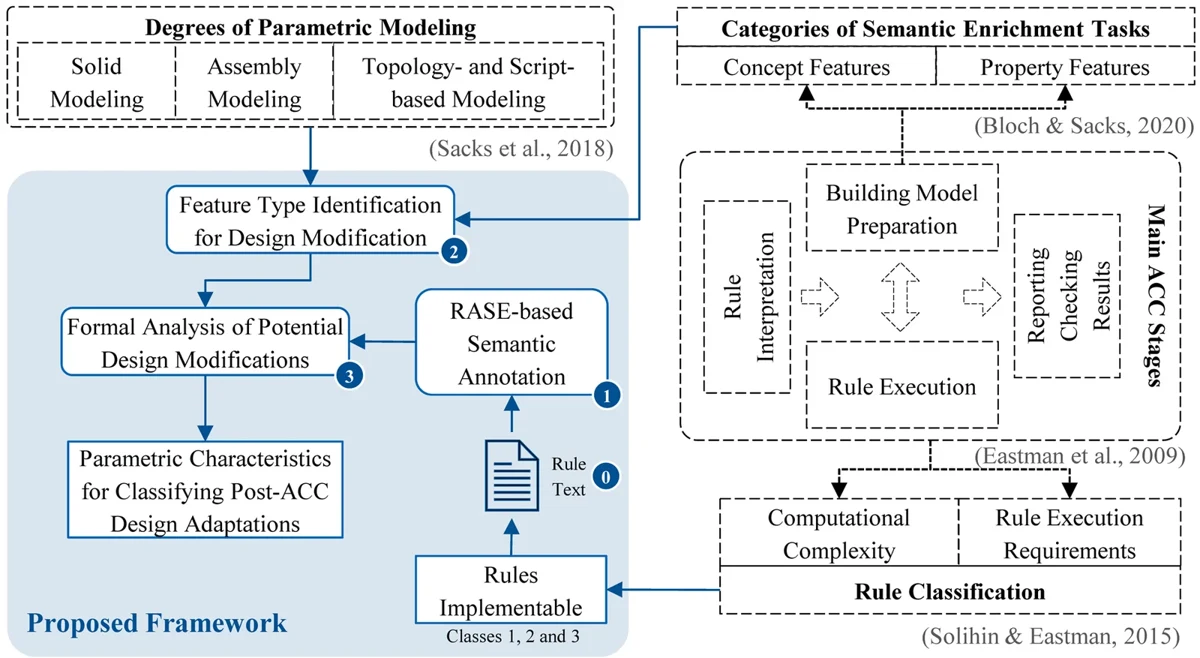
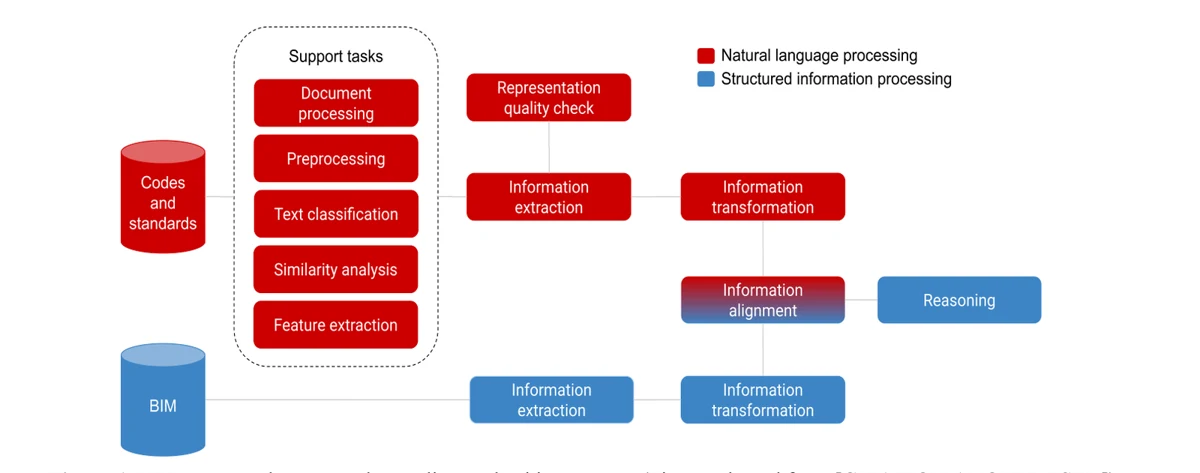
The Beginning, Not the End: Revisiting Automated Compliance Checking for BIM-based Design Adaptation
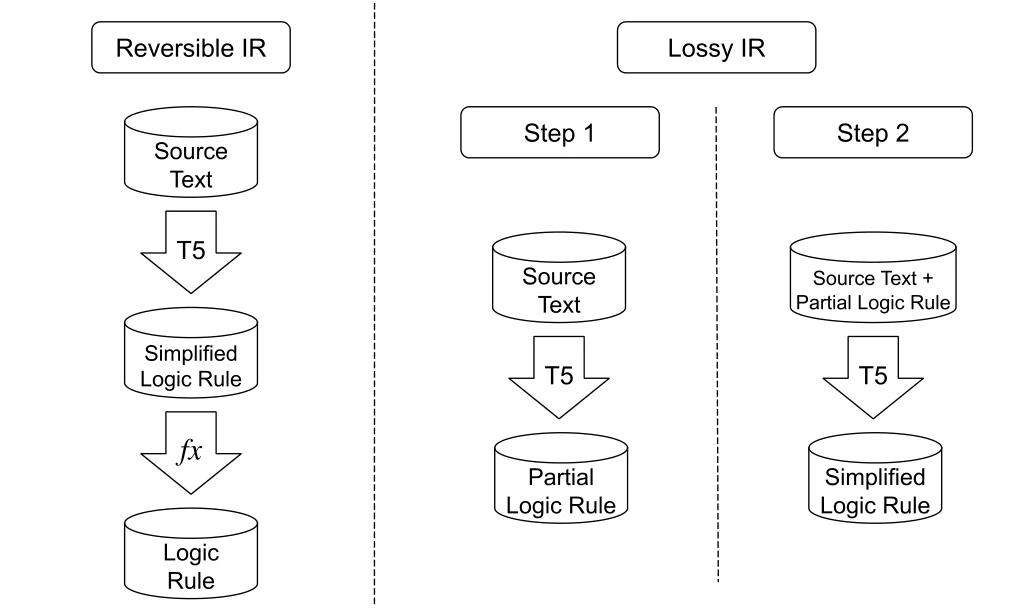
Neural semantic parsing of building regulations for compliance checking
Publications
2026
- AI for Building Permitting: Balancing Speed, Flexibility, and TrustIn: Fauth, J. et al. (eds.): Digital Transformation of Building Permitting. Routledge, 2026, 243-256 DOI
- Querying BIM Models with LLM Agents: A Comparison of Data RepresentationsEuropean Conference on Product and Process Modeling (ECPPM) 2026 Paper
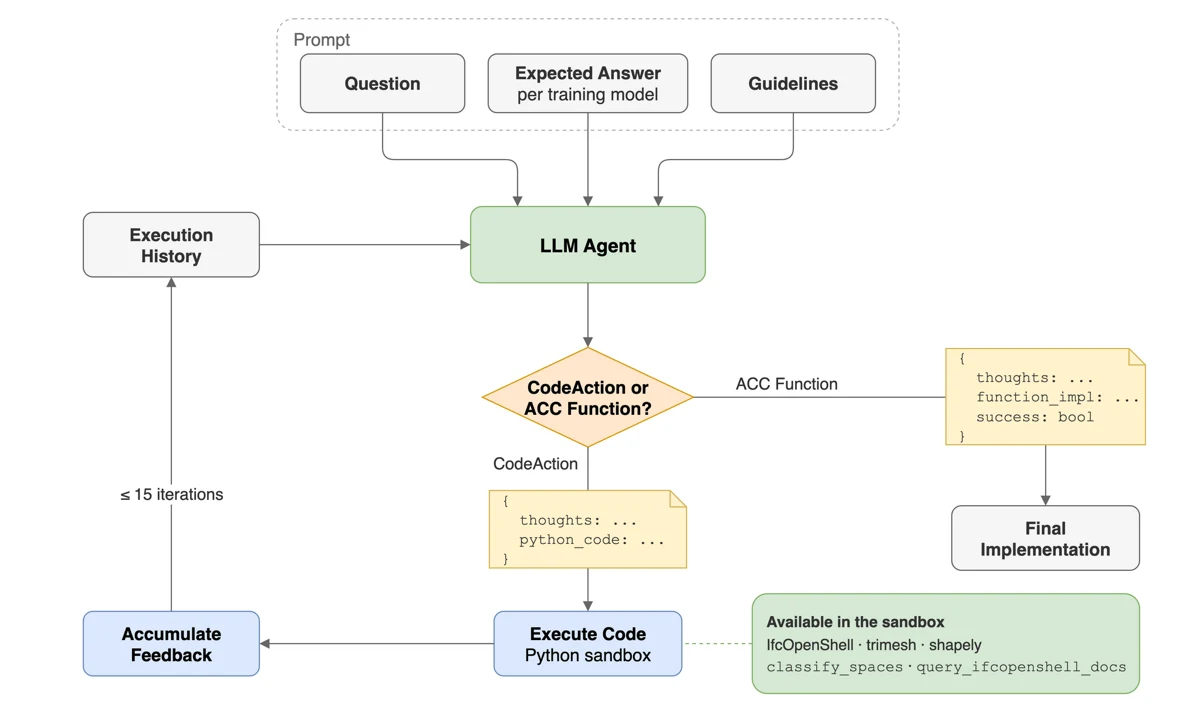
- Assessing the Viability of LLM Agents for Generating Reusable Compliance Checking Functions
- Enabling Cross-Study Comparison: A Framework for Automated BIM-QA EvaluationProc. of the European Conference on Computing in Construction (EC3), 2026 Paper
- Agentic search for BIM information extraction: Systematic evaluationAutomation in Construction 192, 2026, 107260 Paper
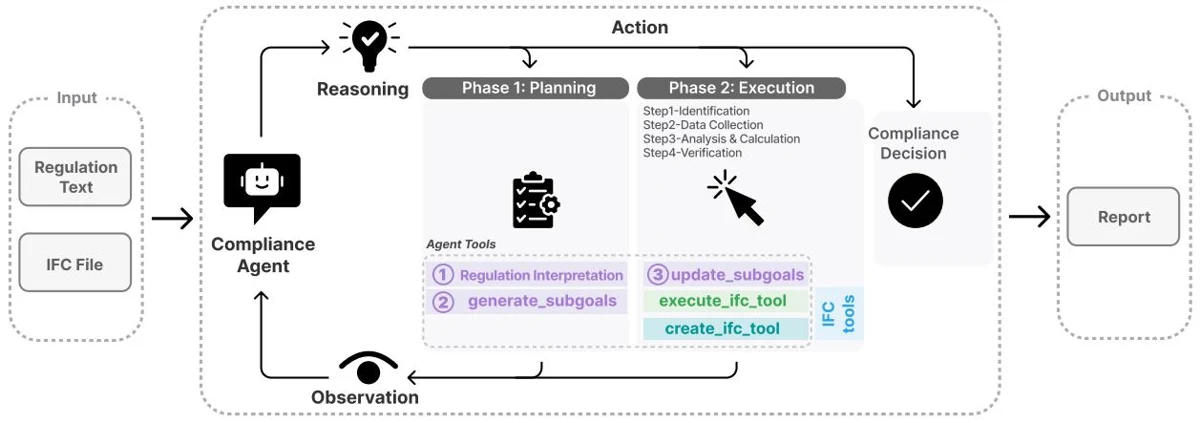
- Towards Adaptive Planning in ReAct Agent Systems for Automated Building Code Compliance Checking
- Ten questions concerning Large Language Models (LLMs) for building applicationsBuilding and Environment 291, 2026, 114260 DOI
- Automated building component alterations driven by LLM-formalized human strategies to achieve code complianceAutomation in Construction 190, 2026, 107148 Paper
2025
- Towards Semantic Enrichment of IFC Models through Language ModelingProc. of the 32nd International Workshop on Intelligent Computing in Engineering (EG-ICE), 2025 DOI
- The Challenge of Automated Compliance Checking: A Regulatory ViewProc. of the 2025 European Conference on Computing in Construction and the CIB W78 Conference on IT in Construction, 2025 Paper
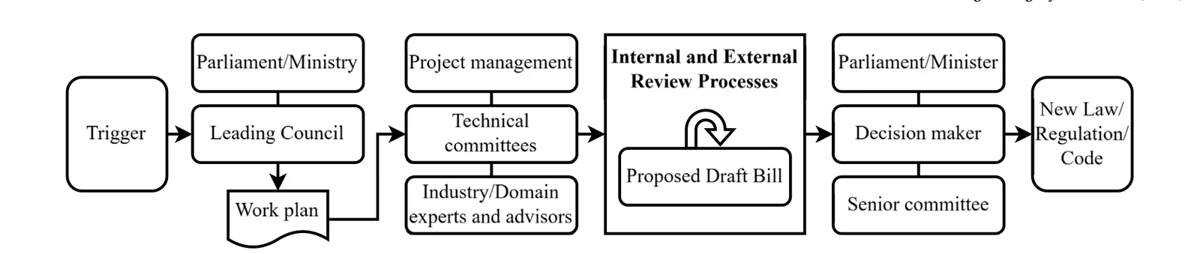
- Exploring the potential of parallel drafting of building regulations
- A visual editor for marked-up codes with auto-completionProc. of the 32nd International Workshop on Intelligent Computing in Engineering (EG-ICE), 2025 DOI
- The Beginning, Not the End: Revisiting Automated Compliance Checking for BIM-based Design AdaptationASCE International Conference on Computing in Civil Engineering (i3CE), 2025 Paper
- A knowledge injection method for supporting automated compliance checking of shield tunnel designsAdvanced Engineering Informatics 68 (Part C), 2025, 103781 DOI
2021 - 2024
- Transformer-based Semantic Parsing of Building Regulations: Supporting Regulators in Drafting Machine-Interpretable RulesPhD thesis, The University of Auckland, 2024 Thesis
- Intermediate representations to improve the semantic parsing of building regulations
- Developing formal representations of building regulations through a parallel drafting processProc. of the 31st International Workshop on Intelligent Computing in Engineering (EG-ICE), 2024 Paper
- Transformer-based semantic parsing of building regulations: Towards supporting regulators in drafting machine-readable rulesDigital Building Permit Conference, 2024 Abstract
- Using large language models for the interpretation of building regulations
- A LegalRuleML editor with transformer-based autocompletionEC3 Conference 2023, volume 4. European Council on Computing in Construction DOI
- Improving the semantic parsing of building regulations through intermediate representationsEG-ICE 2023 Workshop on Intelligent Computing in Engineering PDF
- Training on digitized building regulations for automated rule extractionECPPM 2022 - eWork and eBusiness in Architecture, Engineering and Construction, CRC Press, 2023, 428-435 DOI
- Neural semantic parsing of building regulations for compliance checkingIOP Conference Series: Earth and Environmental Science 1101, 2022, 092022 DOI
- Natural language processing for building code interpretation: A systematic literature reviewProc. of the 38th International Conference of CIB W78, Luxembourg, 2021, 294-303 Paper
Theses
Completed
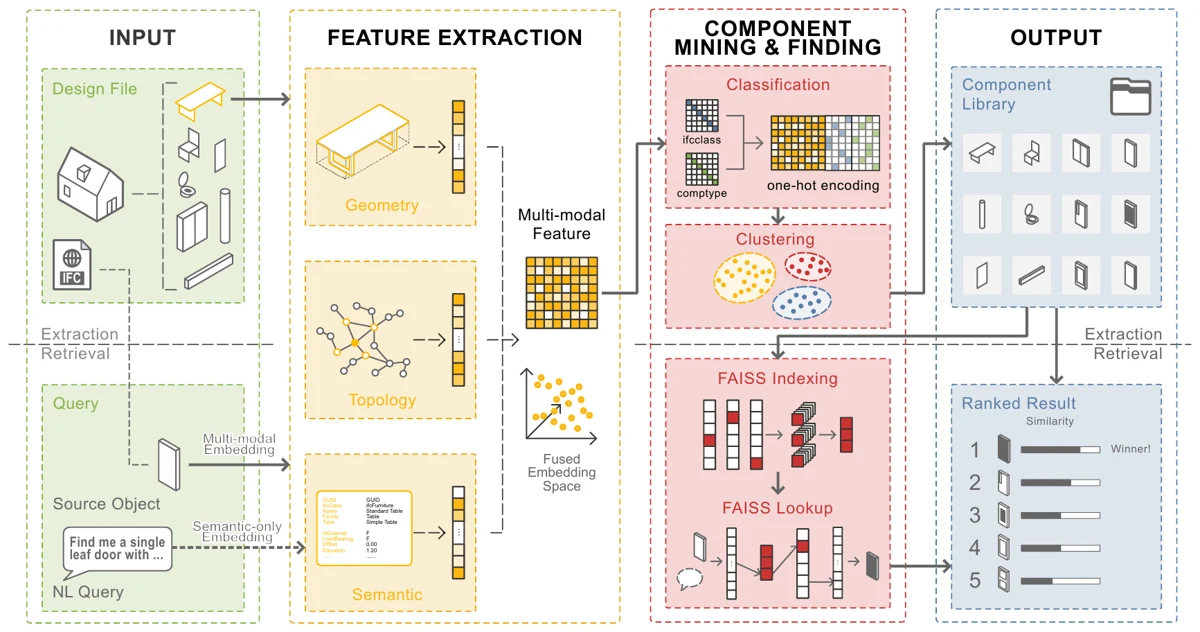
Automated Extraction of Reusable Design Components for BIM Modeling with Machine Learning and Deep Learning Methods
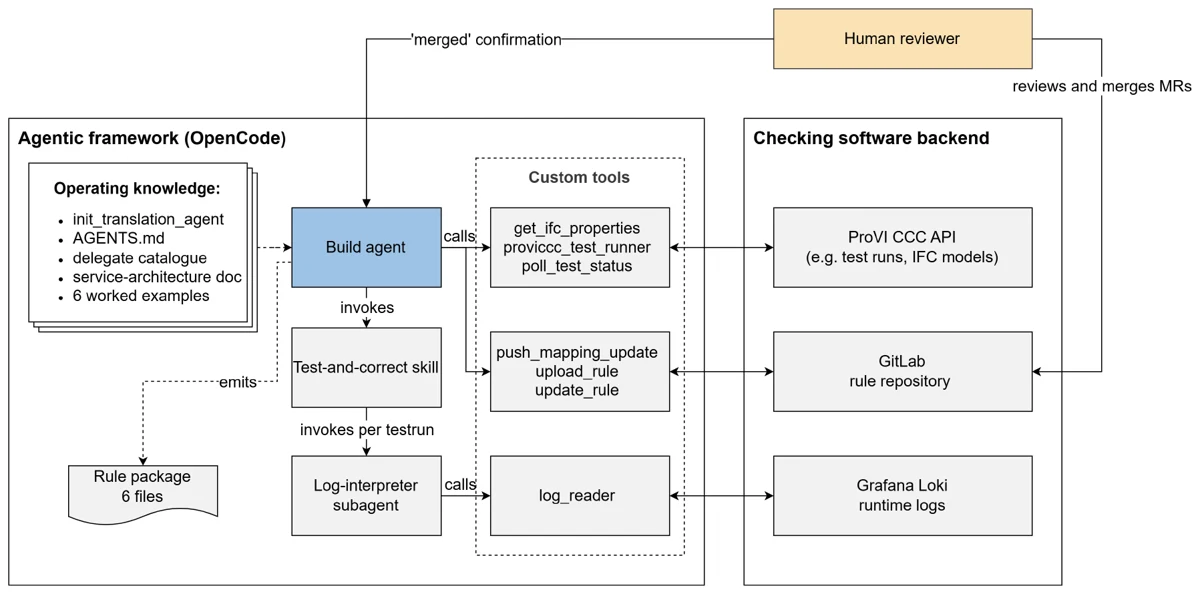
AI-Supported Automation of Code Compliance Checking in Infrastructure Design
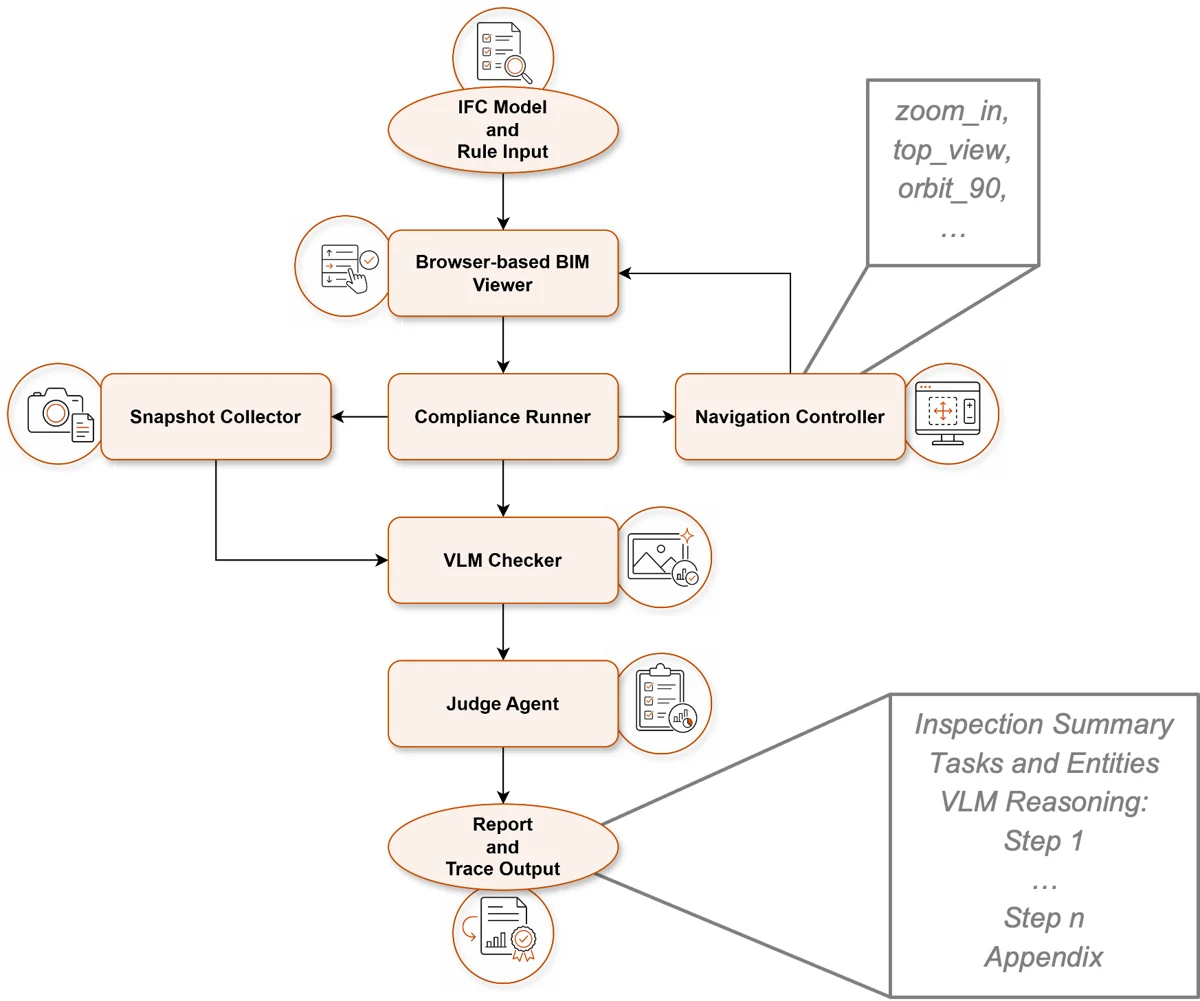
Towards Snapshot-Grounded Visual Compliance Checking of BIM Models via an Agentic Vision-Language Workflow
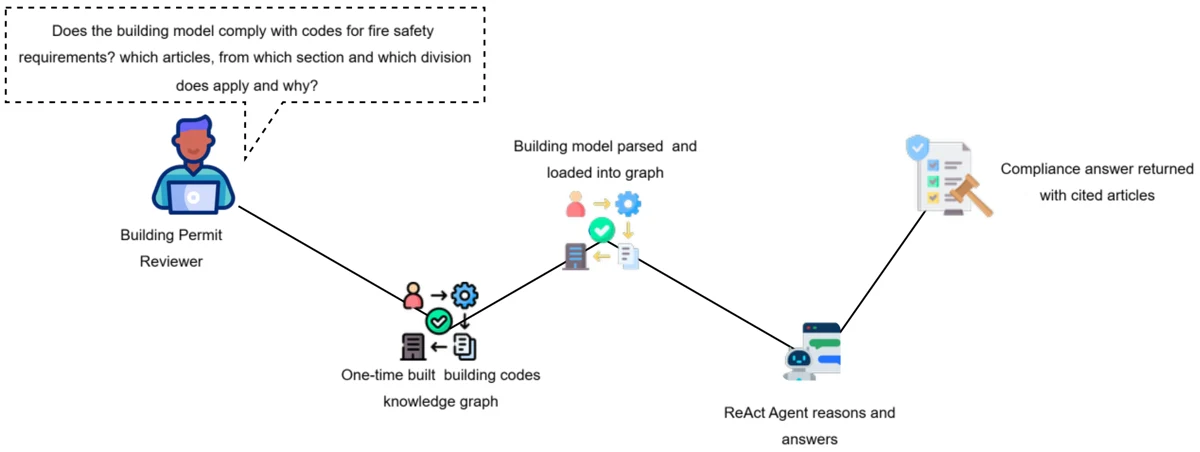
AI Regulation Agent for Automated Building Code Applicability Checks in the Permit Process
- LLM-Driven Automated Compliance Checking in IFC Models against AIA and LoIN Requirements
- An Adaptive LLM-Based Agent Framework with Self-Extending Tool Library for Automated Building Code Compliance Checking
Ongoing
- Towards Autonomous BIM Quality Checking: A GUI Agent Framework for Solibri Model Checker
- An Investigation into How LLMs Handle Incomplete or Inconsistent BIM Data Prior to Compliance Checking
- Automated Semantic Enrichment of BIM Models from Unstructured Project Documents using Large Language Models
- LLM-driven Automated Compliance Checking by Advancing CodeAct Strategies
- LLM-Based Spatial Compliance Checking with Human-in-the-Loop
- Unintended Change in Evolving BIM Models: LLM-Driven Elicitation, Verification and Repair of Spatial Configuration Constraints
- Agentic LLM-Orchestrated Data Fusion for Building Energy Modeling from Real-Time Schedules